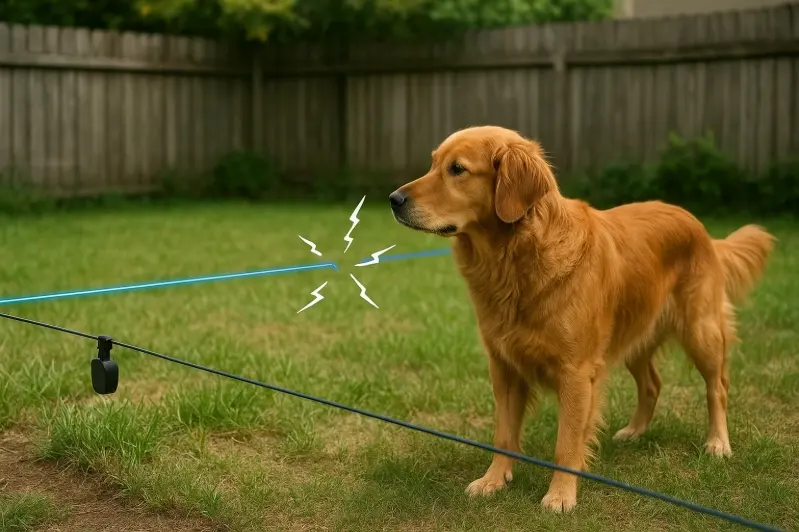
Invisible fences are often marketed as a clean, convenient way to keep dogs inside a yard without building a physical fence. For some owners, they sound like the perfect solution: no blocked view, no expensive fence installation, and more freedom for the dog to move around outside. But many dog owners also wonder whether invisible fences are truly safe and fair.
The honest answer is that invisible fences are not the right choice for every dog. They can reduce certain escape risks in some situations, but they also come with serious limitations. They rely on training, correction, consistency, and the dog’s ability to understand boundaries. They may also create stress, fear, or confusion if used incorrectly.
At EDogDog, we believe dog safety should never be based only on convenience. Technology can help owners protect their dogs, but it should also support the dog’s wellbeing. Invisible fences should be evaluated carefully, especially when compared with physical fencing, leash supervision, GPS collars, and other forms of dog safety tech.
What Is an Invisible Fence?
An invisible fence is a boundary system that uses a buried wire, wireless signal, or GPS-based boundary to keep a dog within a certain area. The dog wears a special collar. When the dog approaches the boundary, the collar may give a warning sound, vibration, or static correction.
The idea is that the dog learns to stay inside the boundary to avoid the correction. Some systems require professional installation, while others are sold as wireless or GPS-based home systems.
Invisible fences are different from physical fences because there is no actual barrier. The dog can technically cross the boundary if they ignore the warning or correction. The system depends on training and the dog’s response to the collar.
This is one of the biggest reasons invisible fences are debated. They may look simple, but they are not the same as a real fence.
Why Owners Consider Invisible Fences
Many owners consider invisible fences because they want to give their dog more outdoor freedom. A physical fence may be expensive, restricted by neighborhood rules, or not possible on certain properties. Some people also prefer the appearance of an open yard.
Invisible fences can seem useful for dogs who enjoy outdoor time but need boundaries. They may also appeal to owners who live on larger properties or want to avoid tying their dog to a leash or long line.
In some cases, owners use invisible fences because their dogs have already escaped from yards. They hope the system will prevent future escapes without requiring major construction.
These reasons are understandable. Owners want their dogs to be safe while still enjoying space. However, the real question is whether the method is safe, humane, and reliable for the individual dog.
The Main Safety Concern: There Is No Physical Barrier
The biggest limitation of invisible fences is that they do not physically stop a dog. A motivated dog may run through the boundary if they are chasing another animal, reacting to fear, greeting a person, or escaping from something scary.
Once the dog crosses the boundary, some dogs may be afraid to return because they associate the boundary area with correction. This can create a dangerous situation where the dog leaves the yard and then hesitates to come back.
A physical fence, while not perfect, creates a real barrier. It helps prevent dogs from leaving and also helps keep outside risks away. An invisible fence does not stop other dogs, wildlife, strangers, or children from entering your yard. This matters if your dog is small, nervous, reactive, or easily threatened.
The American Veterinary Society of Animal Behavior has published position statements supporting humane, reward-based training and warning about risks associated with aversive methods. Invisible fences often involve some form of correction, so owners should consider the emotional impact carefully.
Are Invisible Fences Fair to Dogs?
Fairness depends on how the dog experiences the system. A dog does not understand property lines naturally. They must be trained to connect warning signals with invisible boundaries. If training is rushed or unclear, the dog may feel confused or anxious.
Some dogs may learn the boundary calmly with careful guidance. Others may become stressed, especially if they are sensitive, fearful, young, elderly, or already anxious. For these dogs, a correction-based boundary may make outdoor time feel unsafe.
Fairness also means asking whether the dog has a clear choice and clear information. A visible fence is easier for many dogs to understand because there is an obvious barrier. An invisible fence requires the dog to remember a boundary they cannot see.
If the system causes fear, avoidance, or anxiety, it is not fair to the dog. A safety tool should not make a dog afraid of their own yard.
Training Is Not Optional
Invisible fences require training. Simply putting the collar on the dog and expecting them to understand the boundary is not safe or fair. Dogs need gradual guidance, boundary markers, positive reinforcement, and careful supervision.
Good training should help the dog learn where the boundary is before relying on the system. Owners should walk the dog around the yard, reward them for staying within the safe area, and avoid forcing the dog into corrections.
Even with training, owners should continue supervising outdoor time, especially at first. An invisible fence should not be treated as a babysitter.
The American Kennel Club offers many resources on dog training, including the importance of consistency and clear communication. Any boundary system should be built around those principles, not fear or confusion.
Dogs Who Should Avoid Invisible Fences
Invisible fences are not suitable for every dog. Very anxious dogs may become more fearful. Highly reactive dogs may become more frustrated when people, dogs, or animals pass nearby. Dogs with strong prey drive may run through the correction if they see a squirrel, cat, or deer.
Puppies may not be mature enough to understand the system. Senior dogs with hearing, vision, or cognitive changes may become confused. Dogs with medical conditions may also be poor candidates, especially if stress or sudden correction could worsen their wellbeing.
Small dogs may also be at greater risk because an invisible fence does not stop larger animals from entering the yard. If another dog or predator comes onto the property, the invisible fence gives your dog no physical protection.
If your dog is nervous, reactive, newly adopted, or easily startled, safer options may include supervised leash time, a secure physical fence, a long line, or GPS tracking support through smart collars and GPS.
Invisible Fences and Behavior Problems
One concern with invisible fences is that they may contribute to behavior issues in some dogs. For example, a dog may see another dog walking outside the boundary but be unable to approach. This can increase frustration. Over time, the dog may bark more, lunge toward the boundary, or become more reactive.
Some dogs may also associate the correction with whatever they were looking at when it happened. If a dog receives a correction while seeing a child, cyclist, delivery driver, or another dog, they may begin to associate that trigger with discomfort or fear.
This does not happen in every case, but it is a real risk. Dogs learn through association, and unwanted associations can create long-term problems.
For dogs who already show anxiety or reactivity, invisible fences may make things worse rather than better.
Comparing Invisible Fences with Physical Fences
A physical fence is usually the safer and clearer option when possible. It creates a visible boundary, prevents many escapes, and helps block outside animals or people from entering the yard. It also does not require a correction collar to teach the dog where the boundary is.
However, physical fences are not perfect. Dogs can dig under, climb over, or slip through gaps. Gates can be left open. Fences can break. Owners still need supervision and maintenance.
Invisible fences may be cheaper or easier in some places, but they provide less physical protection. They rely heavily on the dog’s training and response. If the dog ignores the boundary, there is nothing stopping them.
For many families, the best option is a secure physical fence combined with good training, visible ID tags, microchips, and modern safety tools.
Where GPS Collars Fit In
GPS collars are not fences, but they can help if a dog escapes. If your dog crosses a boundary, bolts from a leash, or gets out of the yard, a GPS collar may help you locate them faster. This makes GPS tracking useful as a backup safety layer.
Unlike invisible fences, GPS collars usually do not create a boundary through correction. They focus on location awareness. Some smart collars allow owners to set safe zones and receive alerts when the dog leaves a specific area.
This can be helpful for owners who want technology without relying on static correction. Still, GPS collars also have limits. They need battery, signal, and an active connection. They should be used together with identification and safe handling.
EDogDog’s guide to health wearables also explains how wearable technology can support daily awareness beyond location tracking.
Safer Alternatives to Consider
Before choosing an invisible fence, consider safer alternatives. A traditional fence is often the strongest option if allowed and affordable. For supervised outdoor time, a long line can give a dog freedom while keeping physical control. A secure harness and leash can help during walks and yard training.
You can also create a smaller fenced dog run instead of fencing the entire yard. This may be more affordable and easier to supervise. For renters, temporary fencing may be an option depending on the property.
Training is also essential. Teaching recall, door manners, boundary awareness, and calm behavior around distractions can reduce escape risk. These skills are useful whether you use a fence, leash, or smart collar.
Technology should support training, not replace it.
Questions to Ask Before Using an Invisible Fence
Before deciding, ask whether your dog is confident, calm, and able to learn boundaries without fear. Ask whether the yard has outside risks such as loose dogs, wildlife, traffic, or children passing nearby. Ask whether you can commit to proper training and supervision.
Also consider whether the system is truly necessary. If your dog can be kept safe with a physical fence, leash, long line, or supervised outdoor routine, those options may be more predictable.
If you still choose an invisible fence, use the lowest effective setting, train gradually, supervise closely, and watch your dog’s behavior. If your dog shows fear, avoidance, stress, or confusion, stop and reconsider.
Final Thoughts
Invisible fences can work for some dogs in some situations, but they are not automatically safe or fair. They do not provide a physical barrier, they may fail if a dog is highly motivated, and they can cause stress or confusion if the dog does not understand the boundary.
For many dogs, a physical fence, supervised leash time, long line, or secure dog run is a clearer and safer choice. GPS smart collars can also provide an extra layer of location awareness without replacing responsible supervision.
The safest dog care is built on layers: proper identification, training, secure environments, supervision, and thoughtful use of technology. Invisible fences should never be chosen only because they are convenient. They should be considered carefully based on the dog’s temperament, safety risks, and emotional wellbeing.
As pet technology continues to develop, owners will see more tools shaping the future of dogs. But the best technology will always be the kind that protects dogs while respecting their comfort, confidence, and quality of life.


