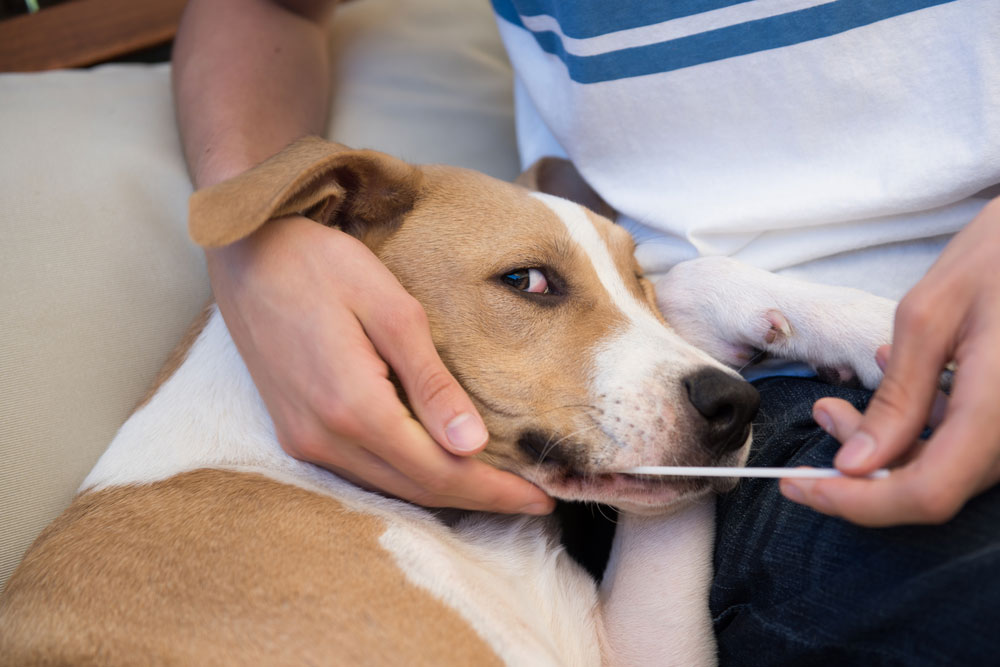
Your dog’s DNA is more than a set of instructions for coat color, size, ears, tail shape, or breed background. It can also hold clues about health, inherited risks, disease patterns, behavior tendencies, and how certain conditions develop over time. Because of this, many owners wonder whether sharing their dog’s DNA data could help future treatments for other dogs.
The answer is yes, it can help, but with important limits. One dog’s DNA alone does not usually change veterinary medicine. But when many dogs contribute DNA samples, health history, lifestyle information, and long-term data, researchers can look for patterns. Those patterns may help identify disease risks, improve screening, guide breeding decisions, support new treatments, and make veterinary care more personalized in the future.
At EDogDog, we believe dog genetics should be understood in a practical way. DNA is not destiny, and genetic data should not be treated like a perfect prediction. But when used responsibly, dog DNA can become part of a larger research effort that benefits many dogs over time.
Why Dog DNA Matters for Research
DNA helps researchers understand why some dogs are more likely to develop certain conditions while others are not. Some diseases have strong inherited components. Others are shaped by a mix of genetics, lifestyle, environment, age, diet, and chance.
Dogs are especially valuable for genetic research because breeds often share certain inherited traits. Some breeds have higher risk for specific conditions, while mixed-breed dogs may provide useful information about genetic diversity. By comparing DNA from dogs with a condition and dogs without it, researchers may identify genetic markers linked to disease risk.
The NHGRI Dog Genome Project explains that hundreds of inherited diseases have been described in domestic dogs, and researchers work to find DNA variants associated with disease to help reduce their occurrence in affected breeds.
This kind of research does not mean every dog with a certain gene will get sick. It means researchers can better understand risk, biology, and possible prevention.
Your Dog’s DNA Is Most Useful with Health Information
DNA by itself is useful, but it becomes much more powerful when paired with health records and lifestyle details. Researchers often need to know more than the genetic code. They need to know whether the dog developed a disease, when symptoms started, what treatments were used, what the dog ate, how active they were, and how they aged.
This is why long-term studies can be so valuable. For example, the Morris Animal Foundation Golden Retriever Lifetime Study follows thousands of golden retrievers to study nutritional, genetic, environmental, and lifestyle risk factors for cancer and other diseases in dogs.
This type of research helps scientists look beyond a single DNA result. It connects genetics with real-life outcomes.
For everyday owners, this is an important lesson: if you ever share your dog’s DNA for research, accurate health history matters. The more complete the information, the more useful the data may be.
How DNA Can Help Identify Disease Risks
One major benefit of canine DNA research is identifying genetic risk markers. A marker is not always a diagnosis. It is a clue that a dog may have an increased chance of developing a certain condition or carrying a gene that could affect offspring.
These markers can help in several ways. Veterinarians may use them to recommend earlier screening. Breeders may use them to make more informed decisions. Researchers may use them to better understand how a disease works.
For example, if researchers find that a certain DNA variant is connected to a heart condition, they may study that condition more closely. Over time, this could lead to better testing, earlier detection, or improved treatment strategies.
EDogDog’s guide to dog DNA and genetics explains how genetic information can help owners understand inherited traits and possible health risks without assuming that genes control everything.
DNA Research Can Improve Breed Health
Some dog breeds have higher risk for certain inherited conditions. This does not mean every dog in the breed is unhealthy, and it does not mean mixed-breed dogs are always free from genetic risk. But breed-related patterns can help researchers and veterinarians focus on prevention.
When enough dogs from a breed are tested and followed over time, researchers may identify which variants are linked to disease and which dogs carry them. This can support better health screening and more responsible breeding.
The Orthopedic Foundation for Animals collects and maintains health testing information to promote companion animal health and reduce the incidence of genetic disease. Large health databases like this can help owners, breeders, and researchers make more informed decisions.
For the future, better genetic understanding may help reduce preventable inherited conditions while protecting genetic diversity. This balance is important because focusing too narrowly on single genes can create other problems if not handled carefully.
DNA Can Support Cancer Research
Cancer is one of the biggest health concerns in dogs, especially in some breeds. DNA research may help scientists understand why certain dogs develop cancer, why some cancers behave aggressively, and why some dogs respond differently to treatment.
Canine cancer research can also be useful because some cancers in dogs share similarities with cancers in humans. Comparative research looks at disease across species to learn more about biology and treatment possibilities.
Research published in the scientific literature has discussed similarities between canine and human cancers, including genetic and tumor biology patterns. This does not mean dogs should be seen only as research models. It means naturally occurring disease in dogs can sometimes help veterinary and medical researchers understand cancer more deeply.
For dog owners, the practical point is simple: when many dogs contribute DNA and health information, researchers may gain clues that help improve future diagnosis and treatment.
DNA and Personalized Veterinary Care
In the future, DNA may help veterinary care become more personalized. Instead of treating every dog the same way, vets may use genetic information, health history, activity data, and lifestyle patterns to guide care more precisely.
This could include earlier screening for dogs with certain risks, safer medication choices for dogs with known sensitivities, tailored nutrition guidance, or more personalized exercise recommendations.
However, this future is still developing. Owners should not expect a DNA test to provide a complete medical plan today. Genetic results should be discussed with a veterinarian, especially if they suggest a health risk.
Modern care is moving toward combining genetics with daily data from tools like health wearables. A DNA test may show what to watch for, while a wearable may show how the dog is doing day to day.
DNA Can Help Study Behavior Too
DNA research is not only about physical health. Scientists also study how genetics may influence behavior. Behavior is complex, and it is never controlled by genes alone. Training, environment, socialization, past experiences, stress, and owner handling all matter.
Still, large DNA studies can help researchers understand how certain inherited traits may influence behavior tendencies. Community science projects like Darwin’s Ark collect owner-provided information and genetic data to study companion animal health and behavior.
This kind of research may eventually help owners better understand behavior risks, training needs, and welfare. But it should be used carefully. A genetic tendency should never be used as an excuse to label a dog unfairly or ignore training.
Every dog is an individual.
The Role of Citizen Science
Citizen science means regular people help with research by sharing information, samples, surveys, or observations. In dog genetics, this may include submitting a DNA sample, completing behavior surveys, sharing medical history, or participating in long-term studies.
This is powerful because researchers cannot study enough dogs without owner participation. When many owners contribute, scientists can build large datasets that reveal patterns no single clinic could see alone.
Citizen science also gives owners a way to contribute to the future of dog health. Your dog’s data may become part of a larger effort that helps future dogs receive better care.
However, owners should choose projects carefully. Look for research connected to universities, veterinary schools, nonprofit foundations, or credible scientific organizations. Read the consent forms and understand how data will be used.
Privacy and Consent Matter
Sharing your dog’s DNA may feel less personal than sharing your own, but privacy still matters. DNA data, health records, location, owner contact information, and survey responses can all be sensitive in different ways.
Before participating in a research project or commercial DNA service, read the privacy policy. Ask what data is collected, whether it may be shared with researchers, whether it is anonymized, and whether you can request deletion. If a company sells tests directly to consumers, understand whether your dog’s data may be used for internal research or external partnerships.
Responsible research should explain consent clearly. You should know what you are agreeing to.
Dog DNA can help science, but it should be shared thoughtfully.
DNA Is Not Enough Without Lifestyle
Even if DNA research improves, lifestyle will still shape a dog’s future. Genes may influence risk, but daily care affects health outcomes too. Diet, weight, exercise, dental care, vaccines, parasite prevention, training, enrichment, and veterinary checkups all matter.
A dog with a genetic risk may stay comfortable longer with good lifestyle support. A dog without known genetic risks can still develop health problems if care is poor.
This is why EDogDog often connects genetics with smart care tools. Smart collars and GPS can support safety. Wearables can help track activity and rest. Vet care can interpret health concerns. DNA gives one part of the picture, not the whole story.
The future of dog health will likely depend on combining many types of information.
Could DNA Help Future Treatments?
Yes, dog DNA can help future treatments by giving researchers a better understanding of disease. DNA studies may reveal why certain diseases happen, which dogs are at higher risk, how conditions progress, and why some dogs respond better to certain treatments.
This could support new medications, earlier screening, improved prevention, better breeding decisions, and more personalized care. But these advances take time. Research often moves slowly, and not every discovery becomes a treatment.
Owners should be careful with overly dramatic claims. A single DNA test will not instantly cure disease. But large-scale genetic research can build the foundation for better care in the future.
This is part of the larger future of dogs, where genetics, wearables, veterinary data, and smart tools may work together.
What Owners Can Do Now
If you are interested in contributing to canine health research, start by learning about credible studies. Look for projects run by veterinary schools, universities, nonprofit research foundations, or respected health organizations.
You can also keep accurate records for your own dog. Save vet reports, test results, medication history, weight changes, activity trends, and behavior notes. If you ever participate in a study, this information may make your dog’s data more useful.
If you use a commercial DNA test, discuss important results with your veterinarian. Do not panic over risk markers, and do not ignore your dog’s real-life health because a test looks clear.
For practical information about smart care and health tools, the EDogDog blog provides guides on genetics, tracking, wearables, safety, and modern dog ownership.
Final Thoughts
Your dog’s DNA could help future treatments for other dogs, especially when it is part of a larger research effort. DNA can help scientists identify disease risks, study cancer, improve breed health, understand behavior, and move toward more personalized veterinary care.
But DNA is most useful when paired with accurate health records, lifestyle details, and long-term follow-up. One dog’s DNA is a small piece of the puzzle. Thousands of dogs together can reveal patterns that may change future care.
Owners should share DNA data thoughtfully, choosing credible projects and understanding privacy terms. They should also remember that genetics is only one part of health. Lifestyle, veterinary care, safety, nutrition, exercise, and daily attention still shape every dog’s future.
Dog DNA research is not about turning pets into data points. It is about learning from today’s dogs to help tomorrow’s dogs live healthier, safer, and more comfortable lives.
For more guides on dog genetics, wearables, and smart pet care, visit the EDogDog FAQs or explore EDogDog’s resources on the changing world of dog technology.


