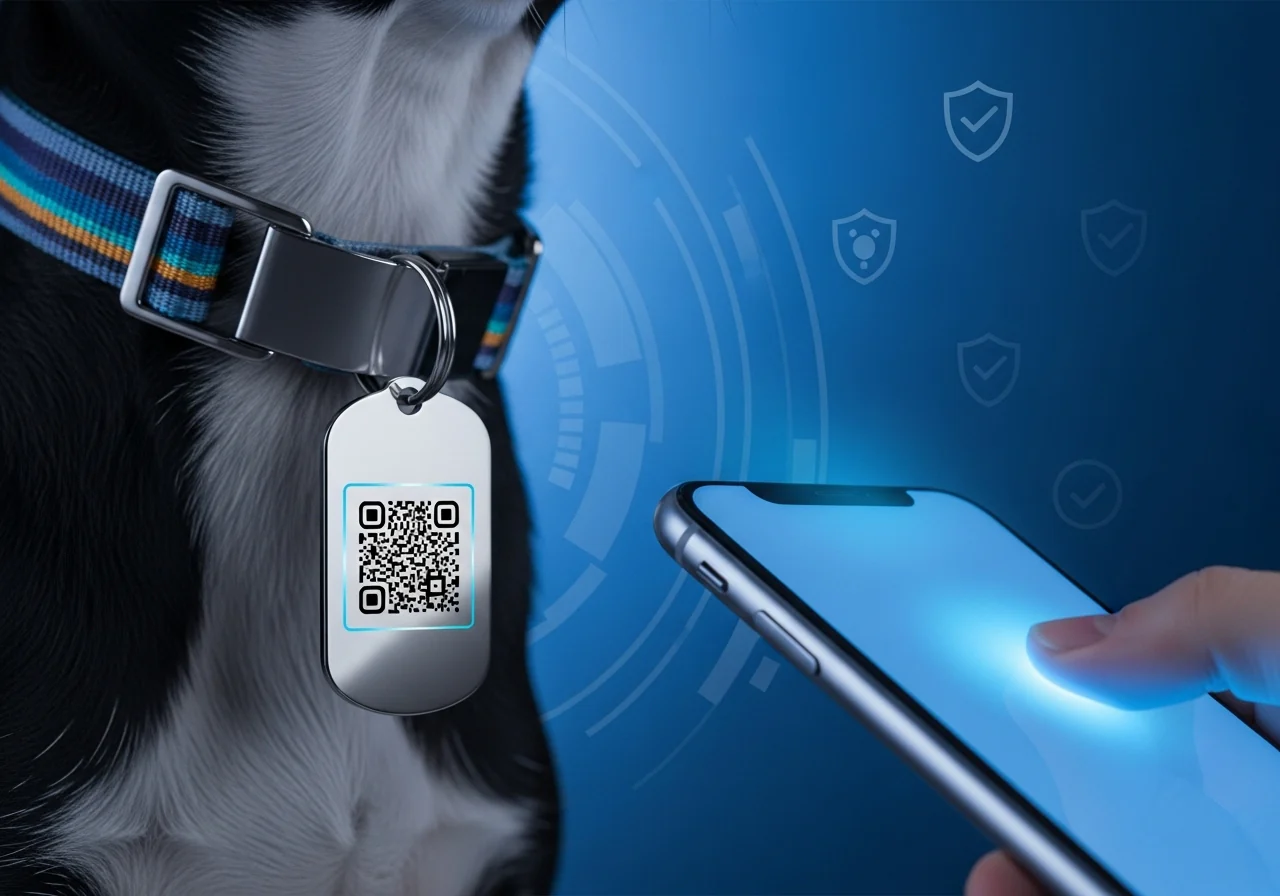
Every dog owner wants one simple thing if their dog ever gets lost: a fast and safe return home. Identification plays a huge role in that. But today, owners have more options than ever. Traditional engraved tags are still popular, QR code tags are becoming more common, and microchips remain one of the most important forms of permanent pet identification.
The question is not really which one is “best” for every dog. The better question is: which combination gives your dog the strongest chance of being identified quickly? At EDogDog, we believe dog safety works best when simple identification tools and modern technology are used together. QR tags, engraved tags, and microchips all have strengths, but they also have limits.
Understanding how each one works can help you build a smarter safety plan for your dog.
What Are Engraved Dog Tags?
Engraved tags are the classic metal or plastic tags attached to a dog’s collar. They usually include the dog’s name, owner’s phone number, and sometimes a short message such as “I’m microchipped” or “Please call my owner.”
The biggest benefit of engraved tags is simplicity. Anyone who finds your dog can read the tag without needing an app, scanner, internet connection, or special equipment. They can look at the collar and call you right away.
This makes engraved tags one of the fastest ways to reunite a lost dog with their owner. If your dog walks into a neighbor’s yard or is found by someone nearby, an engraved tag can solve the situation quickly.
Engraved tags are also affordable, easy to replace, and available in many styles. For basic everyday dog identification, they are still one of the most useful tools.
The Limits of Engraved Tags
Even though engraved tags are helpful, they are not perfect. The biggest issue is that they are attached to a collar. If the collar comes off, the tag is gone too. Dogs can slip collars, break tag rings, or lose tags while running, playing, or squeezing through fences.
Another problem is outdated information. Many owners forget to update tags after changing phone numbers or moving. A tag with an old phone number may not help much during an emergency.
Engraved tags also have limited space. You can usually include a phone number and maybe a short note, but not detailed medical information, backup contacts, vet details, or behavior notes. If your dog is anxious, deaf, needs medication, or should not be chased, that information may not fit on a small tag.
Still, even with these limits, engraved tags are worth using because they are simple and immediately readable.
What Are QR Dog Tags?
QR dog tags are modern ID tags that include a scannable QR code. When someone scans the code with a smartphone, it can open a digital pet profile. Depending on the service, the profile may show your phone number, address area, emergency contacts, medical notes, vet details, photos, and special instructions.
This gives QR tags a major advantage over engraved tags: they can hold much more information. Instead of squeezing everything onto a small metal tag, you can update the online profile whenever needed.
For example, if you are traveling with your dog, you may be able to update the profile with temporary contact information. If your dog has a medical condition, you can include care notes. If your dog is nervous around strangers, you can add instructions such as “Please call instead of chasing.”
QR tags are part of the growing world of dog safety tech, where simple tools are becoming more connected and useful.
The Limits of QR Tags
QR tags are useful, but they depend on technology. The person who finds your dog needs a smartphone, internet access, and the willingness to scan the code. Some people may not know what a QR tag is. Others may be uncomfortable scanning an unknown code.
There can also be service issues. Some QR tag companies require an online account. If the company shuts down, changes its system, or requires a subscription, the tag may become less useful. The code may also become scratched, dirty, or hard to scan over time.
Another concern is privacy. Since QR tags can link to online profiles, owners should be careful about what personal information they share. You may want to include a phone number and general location, but avoid putting too much private information in a public profile.
QR tags work best when they also include basic engraved information, such as a phone number. That way, if someone does not scan the code, they can still contact you directly.
What Is a Microchip?
A microchip is a small identification device placed under your dog’s skin by a veterinarian or trained professional. It contains a unique number that can be read with a scanner at many vet clinics, shelters, and rescue organizations.
A microchip is not a GPS tracker. It does not show your dog’s location and does not send alerts. The American Veterinary Medical Association explains that microchips are identification tools, not tracking devices.
The main strength of a microchip is that it stays with your dog. Collars can fall off, tags can break, and QR codes can become unreadable. But a microchip remains under the skin and can help identify your dog even if they are found without a collar.
This makes microchips one of the most important backup systems for lost pets.
The Limits of Microchips
Microchips are powerful for identification, but they also have limits. They only work after someone finds your dog and takes them to a place with a scanner. If your dog is wandering nearby and no one catches them, the microchip cannot help you track their location.
A microchip also depends on updated registration information. If your contact details are old, the chip may not help someone reach you. The ASPCA recommends microchipping pets and keeping the registration details current.
Another issue is that some people who find a dog may not know to check for a microchip. They may assume the dog has no owner if there is no collar or tag. This is why visible identification is still important, even when your dog has a microchip.
A microchip is essential, but it should not be the only form of ID your dog has.
QR Tags vs. Engraved Tags
QR tags and engraved tags are both collar-based identification tools, but they work differently.
An engraved tag is best for fast, simple contact. It does not require technology, and anyone can read it. If your dog is found by someone nearby, a phone number on the tag may be enough to bring them home quickly.
A QR tag is best for sharing more information. It can include backup contacts, medical details, behavior notes, photos, and updated instructions. This is useful if your dog has special needs or if you want a more complete digital profile.
The best option may be a tag that does both: a visible phone number plus a QR code. That gives the finder two ways to help. If they do not scan the code, they can still call. If they do scan it, they can see more detailed information.
For owners exploring smart safety tools beyond tags, smart collars and GPS can add another layer by helping track your dog’s location in real time.
QR Tags vs. Microchips
QR tags and microchips also serve different purposes. A QR tag is visible and easy to access if the dog is wearing a collar. A microchip is hidden but permanent.
A QR tag can help a regular person contact you quickly. A microchip helps vets, shelters, and rescues identify your dog if collar-based ID is missing.
However, QR tags can be lost if the collar comes off. Microchips cannot be scanned by a random person unless they have the right equipment. That means both have weaknesses.
Using both gives your dog better protection. The QR tag may help immediately. The microchip may help later if the collar is gone.
Engraved Tags vs. Microchips
Engraved tags are visible, fast, and simple. Microchips are permanent, hidden, and official. One is useful for quick public contact, while the other is useful for long-term identification.
If someone finds your dog walking down the street, an engraved tag may get them home within minutes. If your dog is found without a collar and taken to a shelter, a microchip may be the only way to identify them.
The American Kennel Club explains that microchips can help reunite dogs with their owners, but registration information needs to be accurate. This is a reminder that microchips are only as useful as the information connected to them.
For the safest setup, do not choose between a tag and a chip. Use both.
Where Smart Collars Fit In
Smart collars are not the same as QR tags, engraved tags, or microchips, but they can support all three. A smart collar may include GPS tracking, safe zone alerts, activity monitoring, or health-related data.
If your dog escapes, a smart collar may help you locate them before someone else finds them. If someone does find your dog, the tag or microchip helps identify them.
This creates a stronger safety system. The smart collar helps you search. The engraved or QR tag helps the finder contact you. The microchip helps if the collar is missing.
This is part of the larger future of dogs, where traditional pet care and modern technology are working together.
Which Option Should You Choose?
For most dogs, the best answer is not one option. It is a combination.
Every dog should have a microchip with updated registration information. Every dog should also wear a collar with a readable ID tag when safe and appropriate. If you want more detailed information available, a QR tag can be a great upgrade. If your dog is an escape risk, travels often, or spends time outdoors, a GPS smart collar may be another valuable layer.
Your dog’s lifestyle matters. A calm indoor dog may need a simple tag and microchip. A nervous rescue dog may benefit from a QR profile with behavior notes. A dog who runs, hikes, or bolts from the leash may need GPS support as well.
The goal is to make it easy for anyone to help your dog. The faster someone can identify your dog and reach you, the better.
Final Thoughts
QR tags, engraved tags, and microchips all help protect dogs, but they do not do the same job. Engraved tags are simple and fast. QR tags hold more information and can be updated digitally. Microchips provide permanent identification if the collar is lost.
The strongest safety plan uses them together. A visible phone number helps with immediate contact. A QR code can provide extra details. A microchip gives your dog permanent backup identification. For even more protection, a smart collar can help with location tracking and escape alerts.
No identification method is perfect on its own. Tags can fall off, QR codes need scanning, microchips need a scanner, and smart collars need battery and signal. But when combined, they create a much stronger safety net.
If you want to learn more about modern tools for dog safety, visit the EDogDog blog or explore the EDogDog FAQs for practical answers about smart collars, GPS, and dog technology.


